
 Español
Trabajamos con diferentes tipos de celdas, baterías y soluciones de sistemas de almacenamiento de energía.
Para consultas sobre nuestros productos, déjenos un mensaje y nos comunicaremos con usted dentro de las 24 horas.




Trabajamos con diferentes tipos de celdas, baterías y soluciones de sistemas de almacenamiento de energía.
Para consultas sobre nuestros productos, déjenos un mensaje y nos comunicaremos con usted dentro de las 24 horas.
Los vehículos eléctricos de baja velocidad (VELV), que incluyen carritos de golf, vehículos eléctricos urbanos (VEV), patinetes eléctricos, autobuses escolares y carros utilitarios, están ganando popularidad rápidamente en todo el mundo. A medida que aumentan los precios del combustible y se endurecen las normativas medioambientales, cada vez más empresas y particulares optan por los VELV como una alternativa eficiente y rentable a los vehículos tradicionales de gasolina.
La batería es el componente principal de cualquier vehículo eléctrico ligero, y elegir la adecuada marca la diferencia en autonomía, fiabilidad, seguridad y coste total de propiedad a largo plazo. Las baterías de litio se han convertido en la opción preferida frente a las tradicionales de plomo-ácido. Pero con tantas opciones disponibles, ¿cómo elegir la correcta?
Esta completa guía para compradores abarca todo lo que necesita saber, desde la composición química de las baterías y las especificaciones clave hasta recomendaciones específicas para cada aplicación y consejos de mantenimiento.
Los LSEV son vehículos eléctricos a batería diseñados para funcionar a velocidades generalmente inferiores a 45 km/h (28 mph). Se utilizan ampliamente en:
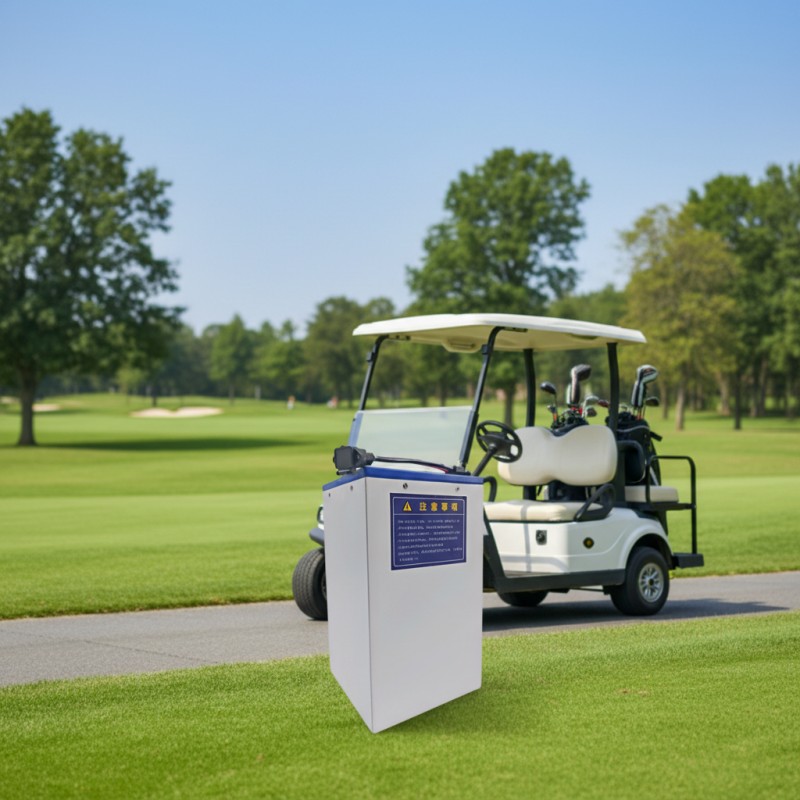
Campos de golf y complejos turísticos
Comunidades residenciales cerradas y campus universitarios
Aeropuertos, almacenes e instalaciones logísticas
Operaciones agrícolas y de servicios públicos rurales
Entrega urbana de última milla y desplazamientos cortos al trabajo.
Parques turísticos y recreativos
Dado que los vehículos eléctricos ligeros suelen operar en entornos controlados y repetitivos, la consistencia del rendimiento, la vida útil y la fiabilidad de la batería son mucho más importantes que la potencia máxima de salida. Por ello, las baterías de LiFePO4 se han convertido en la opción preferida a nivel mundial.
Muchos vehículos eléctricos de baja velocidad aún funcionan con baterías tradicionales de plomo-ácido convencionales (FLA) o selladas (SLA). Si bien estas son más económicas inicialmente, su costo real a largo plazo es significativamente mayor. A continuación, se muestra una comparación de las baterías de litio en todos los aspectos clave:
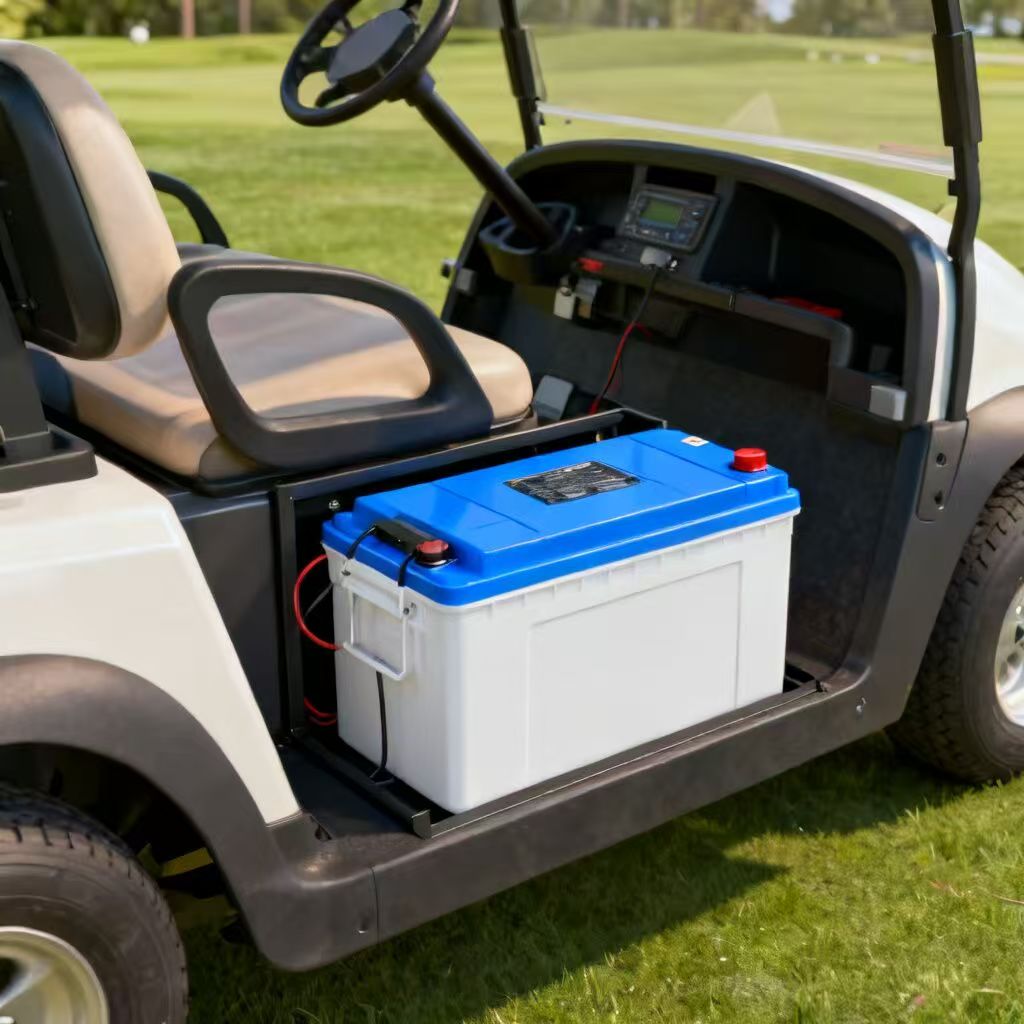
Peso y densidad energética
Las baterías de litio son entre un 60 % y un 70 % más ligeras que las baterías de plomo-ácido equivalentes. Para un carrito de golf de 48 V/100 Ah, una batería de litio podría pesar entre 25 y 30 kg, en comparación con los 60 a 80 kg de una de plomo-ácido. Esta reducción de peso mejora directamente la autonomía y la aceleración del vehículo, además de disminuir el desgaste de los neumáticos y los componentes de la suspensión.
Ciclo de vida y longevidad
Una batería LiFePO4 de calidad ofrece entre 2000 y más de 5000 ciclos de carga con una profundidad de descarga (DoD) del 80 %, mientras que las baterías de plomo-ácido estándar suelen alcanzar solo entre 300 y 500 ciclos. En la práctica, una batería de litio en un carrito de golf de uso diario puede durar entre 8 y 10 años, frente a los 2 o 3 años de una batería de plomo-ácido, lo que reduce drásticamente la frecuencia de reemplazo y los costes asociados a los tiempos de inactividad.
Velocidad y eficiencia de carga
Las baterías de litio se cargan mucho más rápido que las de plomo-ácido. Una batería de litio de 48 V/100 Ah suele cargarse completamente en 2 a 4 horas, frente a las 8 a 12 horas que tarda una de plomo-ácido. Esto es fundamental para los operadores de flotas que necesitan vehículos listos para varios turnos al día. Además, las baterías de litio alcanzan una eficiencia de carga del 95 al 99 %, en comparación con el 70 al 85 % de las de plomo-ácido, lo que significa que se desperdicia menos energía en cada ciclo de carga.
Mantenimiento cero
Las baterías de plomo-ácido requieren mantenimiento regular: revisar y rellenar el agua destilada, limpiar la corrosión de los terminales y ecualizar las cargas. Las baterías de litio no requieren nada de esto. Una vez instaladas con un sistema de gestión de baterías (BMS) adecuado, no requieren ningún tipo de mantenimiento, lo que supone una importante ventaja operativa para las empresas que gestionan grandes flotas.
Suministro de energía constante
Las baterías de plomo-ácido sufren una caída de voltaje significativa durante la descarga, lo que significa que su vehículo eléctrico ligero pierde potencia notablemente a medida que baja el nivel de la batería. Las baterías de litio mantienen una curva de descarga plana y estable, ofreciendo un voltaje y un rendimiento constantes desde el 100 % hasta aproximadamente el 20 % de carga. Esto significa que el rendimiento de conducción es el mismo al final de la jornada que al principio.
Existen varias químicas de baterías de litio en el mercado, incluidas NMC (níquel manganeso cobalto), NCA (níquel cobalto aluminio) y LiFePO4 (fosfato de hierro y litio). Para aplicaciones LSEV, El LiFePO4 es el claro ganador.Y aquí les presentamos un análisis detallado de por qué:
• Estabilidad térmica y químicaEl LiFePO4 posee la química más estable de todos los tipos de litio. No experimenta sobrecalentamiento en condiciones normales, lo que lo hace significativamente más seguro que las químicas NMC o NCA, algo fundamental para aplicaciones en espacios cerrados como almacenes, estacionamientos subterráneos o estaciones de carga interiores.
• Sin cobalto ni níquel.Las baterías de LiFePO4 no contienen cobalto ni níquel, materiales asociados con riesgos en la cadena de suministro, volatilidad de precios y problemas de abastecimiento ético. Esto las hace más estables en cuanto a costos y respetuosas con el medio ambiente.
• Mayor tolerancia a la temperaturaEl LiFePO4 ofrece un rendimiento fiable en un amplio rango de temperatura de funcionamiento (de -20 °C a +60 °C), lo que lo hace adecuado para su uso en el frío extremo de Siberia y Kazajstán, así como en los climas más cálidos de Nueva Zelanda y Uzbekistán.
• Curva de descarga larga y planaLa curva de voltaje plana del LiFePO4 significa una entrega de energía constante y predecible, a diferencia del NMC, que muestra una caída de voltaje más pronunciada a medida que se descarga.
• Cumplimiento ambientalEl LiFePO4 no contiene metales pesados y cumple con las estrictas normativas medioambientales de la UE, Asia-Pacífico y los países de la CEI, lo que reduce las cargas de eliminación y cumplimiento para los importadores y los operadores de flotas.
Seleccionar el correcto Paquete de baterías de litio para su vehículo eléctrico de baja velocidad Requiere una cuidadosa consideración de varios parámetros técnicos. Acertar con ellos desde el principio evita costosos errores y garantiza un rendimiento óptimo del vehículo.
• Voltaje nominal: Las opciones comunes incluyen 36 V, 48 V, 60 V, 72 V y superiores.
• Capacidad (Ah) y autonomía: Una mayor capacidad (Ah) proporciona una mayor autonomía.
• Tasa de descarga continua (tasa C): importante para cargas pesadas y funcionamiento con paradas y arranques frecuentes.
• Sistema de gestión de baterías (BMS): Esencial para la protección, el equilibrio y la gestión de la temperatura.
• Rango de temperatura de funcionamiento: Busque un rendimiento de amplio rango con funciones de calefacción opcionales para climas fríos.
• Certificaciones: UN38.3, IEC 62619, CE, RoHS, etc.
• Carritos de golf — Recomendado: 48 V / 100–150 Ah LiFePO4
• Vehículos eléctricos de barrio (VEN) — Recomendado: 48V–72V / 100–200Ah
• Carros utilitarios y carretillas elevadoras eléctricas — Recomendado: 48V–80V / 150–200Ah (alta tasa C)
• Equipos de apoyo en tierra para aeropuertos — Recomendado: 48V–80V / 200Ah+
• Patinetes eléctricos y bicicletas eléctricas — Recomendado: 36V–72V / 20–60Ah
Vehículos agrícolas y de uso rural — Recomendado: 48V–72V / 100–200Ah
Una de las objeciones más comunes a las baterías de litio es el costo inicial. Si bien es cierto que un paquete de litio suele costar entre 2 y 3 veces más que uno equivalente de plomo-ácido en el momento de la compra, costo total de propiedad (TCO) durante un período de 10 años Cuenta una historia muy diferente:
• Sustitución de la batería de plomo-ácido cada 2-3 años = 3-4 sustituciones en 10 años
• Cada reemplazo implica costo de compra + mano de obra + tarifas de eliminación
• Batería de litio: normalmente una sola compra en el mismo período de 10 años.
• Ahorro de energía: la eficiencia de carga del litio (95-99%) frente al 70-85% de las baterías de plomo-ácido supone un ahorro de electricidad del 15-25% en costes.
• Ahorro en mantenimiento: no se requieren comprobaciones de agua, limpieza de terminales ni cargos por ecualización.
• Ahorro de tiempo de inactividad: mayor vida útil + carga más rápida = más horas de funcionamiento al día.
Para los operadores de flotas que gestionan 10, 50 o más de 100 vehículos en mercados como Rusia o Kazajstán, el ahorro acumulado al cambiar a baterías de litio es sustancial, y a menudo alcanza decenas de miles de dólares a lo largo de la vida útil de una flota.
Incluso las mejores baterías de litio se benefician de un uso adecuado. Siga estas recomendaciones para maximizar la vida útil y el rendimiento de su batería:
• Evite descargar regularmente la batería por debajo del 20 % de su estado de carga (SoC); la descarga profunda acelera la degradación de la celda.
• Para un almacenamiento prolongado (más de 2 semanas), guarde la batería con un estado de carga del 50-80% en un entorno fresco y seco.
• Utilice siempre el cargador de litio recomendado por el fabricante; nunca improvise con cargadores alternativos.
• Evite dejar la batería cargada al 100% durante períodos prolongados si el vehículo no se va a utilizar; la mayoría de las unidades BMS modernas se encargan de esto automáticamente.
• En climas fríos, deje que el calentador de la batería caliente completamente el paquete antes de usarlo con alta corriente o para una carga rápida.
• Inspeccione periódicamente los terminales y conectores para detectar corrosión o conexiones sueltas, especialmente en entornos húmedos o costeros (esto aplica a los usuarios de Nueva Zelanda).
• Supervise periódicamente la lectura del estado del BMS: la mayoría de las baterías de litio modernas proporcionan el estado de carga (SoC), el número de ciclos y el estado de salud a través de una pantalla o una aplicación Bluetooth.
Las baterías de litio LiFePO4 ofrecen un rendimiento, seguridad y valor superiores para vehículos eléctricos de baja velocidad. Contacte con nuestro equipo para obtener asesoramiento experto y soluciones personalizadas.
P1: ¿Cuál es la mejor batería de litio para un carrito de golf o un vehículo eléctrico de baja velocidad?
Las baterías de LiFePO4 (fosfato de hierro y litio) son la mejor opción para carritos de golf y vehículos eléctricos ligeros. Ofrecen entre 2000 y más de 5000 ciclos de carga, una excelente seguridad térmica, una curva de descarga plana para una entrega de energía constante y cero requisitos de mantenimiento, lo que las convierte en la opción más rentable durante la vida útil del vehículo.
P2: ¿Puedo reemplazar la batería de plomo-ácido de mi vehículo eléctrico ligero actual por una batería de litio?
Sí, en la mayoría de los casos. Es necesario que el voltaje del sistema coincida (normalmente 48 V o 72 V), usar un cargador compatible con litio y verificar la compatibilidad del controlador del motor. Una actualización a litio suele ofrecer entre dos y tres veces más autonomía, una vida útil significativamente mayor y requisitos de mantenimiento mucho menores en comparación con la batería de plomo-ácido original.
P3: ¿Cuánto dura una batería de litio en un vehículo eléctrico de baja velocidad?
Una batería LiFePO4 de calidad dura entre 8 y 10 años con un uso normal, ofreciendo entre 2000 y 5000 ciclos de carga con una descarga del 80 %. En comparación, las baterías de plomo-ácido suelen necesitar ser reemplazadas cada 2 o 3 años. Con hábitos de carga y almacenamiento adecuados, la vida útil de las baterías de litio puede prolongarse aún más.
P4: ¿Son seguras las baterías de litio para vehículos eléctricos ligeros en climas extremadamente cálidos o fríos?
Sí. El LiFePO4 es una de las químicas de litio más estables térmicamente disponibles. Para entornos de alta temperatura, el BMS monitoriza y gestiona automáticamente la temperatura de la celda. En climas fríos como Rusia o Asia Central, las baterías con funciones de calefacción BMS integradas mantienen un rendimiento fiable hasta -20 °C o menos, evitando la pérdida de capacidad y los daños en la celda durante el invierno.
P5: ¿Qué voltaje de batería de litio necesito para mi LSEV?
La mayoría de los vehículos eléctricos ligeros (LSEV) funcionan con sistemas de 48 V. Los vehículos utilitarios de mayor rendimiento o tamaño pueden usar configuraciones de 60 V, 72 V u 80 V. Siempre revise la placa de identificación o la hoja de especificaciones del controlador del motor de su vehículo antes de seleccionar una batería. Un voltaje incorrecto puede dañar el controlador o provocar un rendimiento deficiente.
P6: ¿Es realmente más barato el litio que el plomo-ácido a largo plazo?
Sí. Si bien las baterías de litio tienen un costo inicial mayor, el costo total de propiedad a lo largo de 10 años es significativamente menor si se consideran: menos reemplazos (1 batería de litio frente a 3 o 4 de plomo-ácido), menores costos de electricidad debido a una mayor eficiencia de carga, cero mano de obra de mantenimiento y menor tiempo de inactividad del vehículo. Para los operadores de flotas, estos ahorros pueden ser sustanciales.

Dejar un mensaje
Escanear a WeChat :

Hi! Click one of our members below to chat on